Beyond the Stainless Steel: The Process Engineering Blueprint of a Bespoke Brewhouse
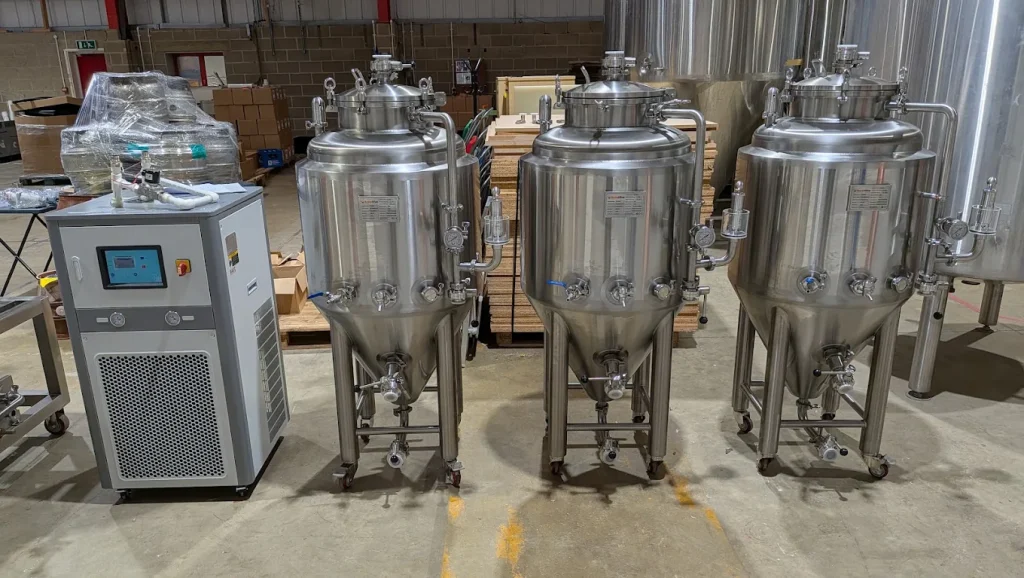
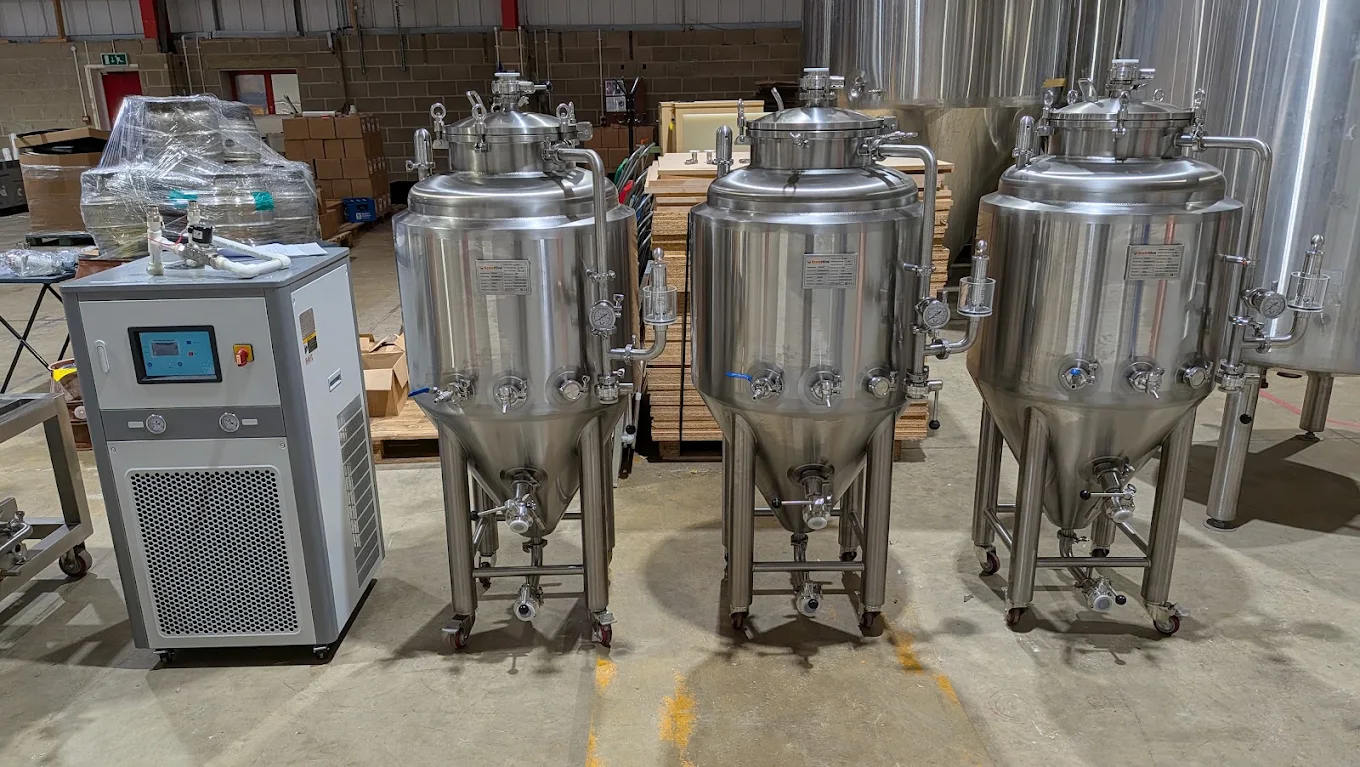
If you ask most people what goes into building a commercial brewery, they will point to the shiny, polished stainless steel tanks. But any veteran head brewer or production manager knows the truth: stainless steel is just the wrapper. The real heart of a reliable, high-yield commercial operation is the invisible system of chemical engineering, thermodynamics, and fluid dynamics flowing through it.
When you buy a setup straight from a generic sales catalog, you are purchasing a collection of isolated components. But because every brewhouse is a highly bespoke installation, you aren't just looking for physical hardware - you are designing a custom food-grade process plant.
For startups sourcing the best brewing equipment in the UK, or established brands upgrading to premium commercial brewing equipment systems, success relies on anchoring your project in Process Engineering 101. Here is a look behind the curtain at the fundamental scientific laws, mathematical equations, and technical design blueprints required to transform raw steel into an optimised, high-performance brewing system.
The Core Scientific Calculations: Thermal Dynamics and Fluid Flows
Before a single line is drawn in CAD software, the entire brewhouse must be balanced mathematically. Every vessel capacity, jacket surface area, and pipe diameter is governed by unbreakable laws of physics, utilizing core equations to determine the system's architecture.
- Mass and Energy Balances (Conservation of Matter and Energy): What goes in must come out, and every calorie of heat must be accounted for. Engineers track exactly how malt, water, and hops move through the hot-side brewhouse, calculating how much extract survives as high-gravity sweet wort. Simultaneously, we use the thermal energy equation to calculate the precise utility loads required to heat the system:
-
- (Where Q is the thermal energy required, m is the mass of the wort/water, is the specific heat capacity, and ΔT is the target temperature change). This equation determines exactly how many kilowatts or steam BTUs are required to bring a cold liquor tank up to strike temperature, or to maintain a vigorous, rolling boil in a bespoke kettle.
-
- Fluid Dynamics and Shearing: Moving hot, viscous wort requires precise velocity control. If a centrifugal transfer pump moves liquid too violently, it introduces structural shear that can destroy yeast health or cause hot-side aeration. Engineers use Bernoulli’s Principle and calculate the Reynolds Number (Re) to predict whether fluid flow inside the hygienic pipework will be smooth (laminar) or aggressively turbulent:
-
- (Where ρ is fluid density, v is velocity, D is pipe diameter, and μ is dynamic viscosity). This ensures fluid velocity is optimized to prevent product degradation while maintaining enough velocity for effective clean-in-place (CIP) scouring.
-
High-Level Design Documentation: From Concept to Construction
Once the custom calculations are verified for your site's specific volumetric goals, the engineering team translates the data into a rigorous stack of industrial schematics. This documentation forms the technical foundation of a bespoke brewing equipment system:
Process Flow Diagram (PFD) ➔ Piping & Instrumentation Diagram (P&ID) ➔ Functional Description (PLC Logic)
- Process Flow Diagrams (PFDs): The conceptual macro-level layout. The PFD outlines the entire operational journey - mapping the primary path from the grain mill to the mash tun, through the whirlpool, across the plate heat exchanger, and into the cellar. It contains key mass balances, temperature profiles, and fluid pressures without cluttering the page.
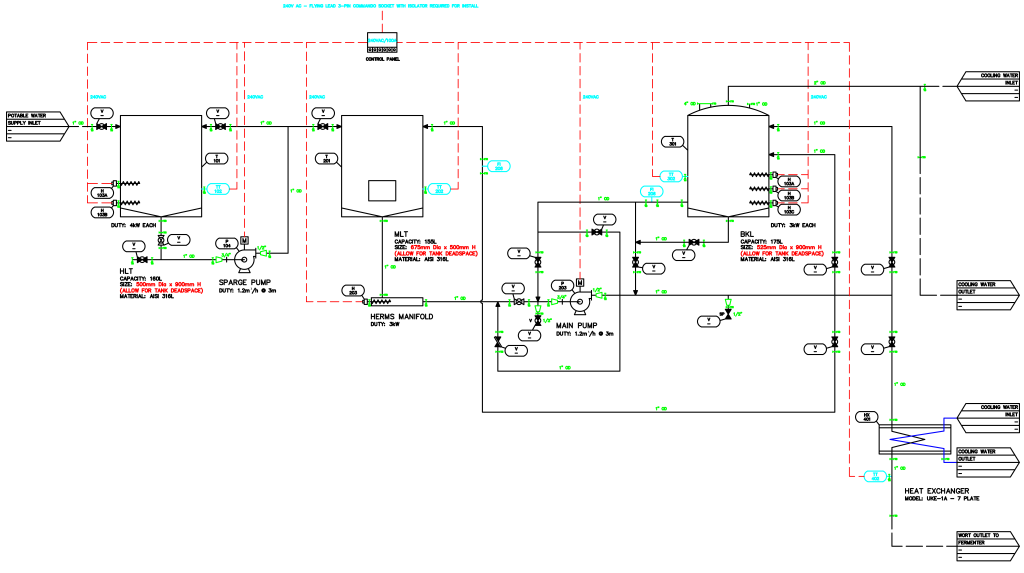
- Piping & Instrumentation Diagrams (P&IDs): The actual master blueprint for construction, installation, and safety. A P&ID maps every single physical line, reducer, manual valve, automated pneumatic valve, control loop, and inline sensor in the facility. If a temperature probe needs to communicate with a glycol valve on a fermentation tank, that exact mechanical and electronic interlock is explicitly detailed here.
- Functional Descriptions (The Software Logic): The brain manual for your brewhouse. This document acts as the step-by-step logic text that instructs the digital PLC control system or PID loops exactly when to open a valve, drop a temperature, or trigger an automated cleaning cycle, removing human error from critical transitions.
High-Level Design Documentation: From Concept to Construction
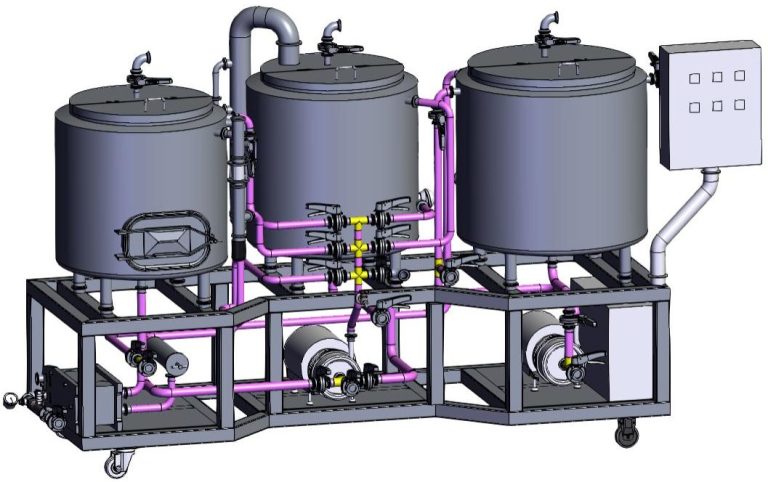
A perfect schematic on paper is useless if it doesn't fit through your brewery's roll-up doors, lacks ergonomic flow, or violates local regulations. The final stage of engineering bridges the gap between digital theory and heavy brewery machinery setup:
- Electrical Control & Wiring Diagrams: The nervous system of the plant. These blueprints map out the high-voltage panel wiring, emergency stops, safety relays, and low-voltage signal lines running from digital sensors back to the central automated brain.
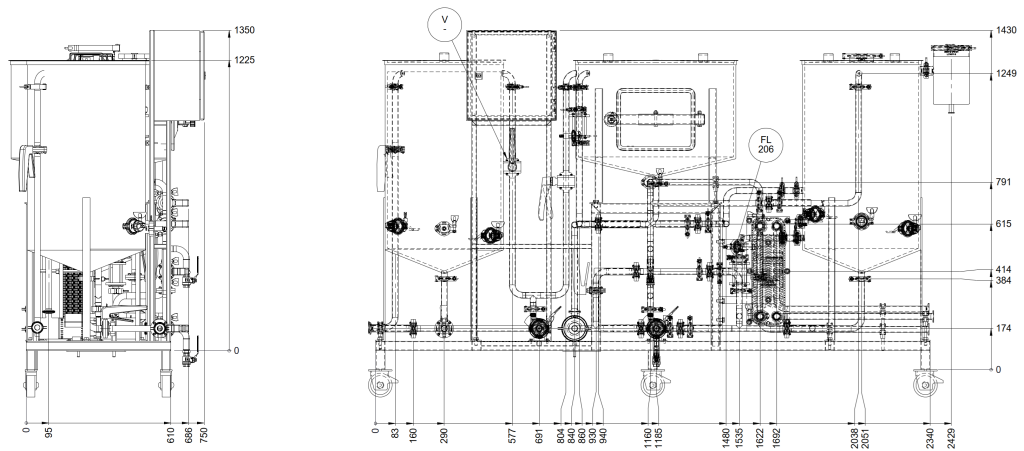
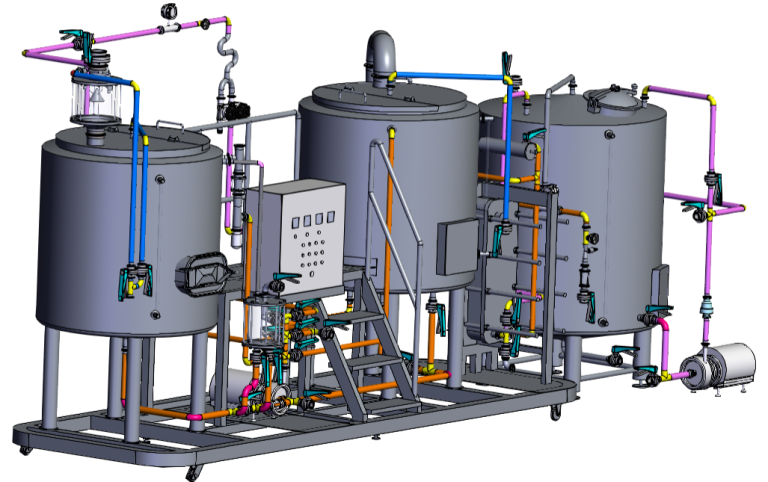
- General Arrangement (GA) & 3D Plant Layout Drawings: The spatial reality check. Using advanced CAD platforms, engineers build a 3D digital twin of your actual physical building. This ensures there is sufficient clearance for vessel manholes, proper drainage pitch under the tanks, adequate spacing for forklift access, and ergonomically sound pipe routing for the brew team.
The BrewHive Difference: We Don't Just Sell Tanks. We Engineer Systems.
Most equipment vendors in the marketplace are simply brokers—they take an order, source generic tanks from overseas, drop them at your site, and leave you or a local fabricator to figure out how to actually interconnect them.
At BrewHive Ltd, our unique selling proposition is simple: we are a design and process engineering firm first, and a professional beer brewing equipment supplier second.
Because every commercial project requires a completely bespoke layout tailored to unique facility constraints, utility availabilities, and recipe styles, we include professional drawing provisions right alongside our initial equipment enquiries. This practical step ensures you gain total clarity on your system's layout, utility loads, and operational efficiency long before fabrication ever begins. By anchoring every project in rigorous process design, we don't just sell you steel - we partner with you to engineer a seamless, predictable system that protects your yields, eliminates costly installation surprises, and preserves your beer quality from batch one.