
Brewing Equipment Essentials: Must-Have Tools for Every Commercial Brewer
The transition from a small-scale setup to full professional production requires a major upgrade in hardware and infrastructure. While manual processes suffice for testing recipes, expanding to commercial operations demands efficiency, exact reproducibility, and strict sanitary controls.
For startups sourcing commercial brewing equipment systems in the UK, or established facilities seeking to invest in the best brewing equipment manufacturers can supply, prioritizing high-yield industrial infrastructure is vital. These are the core essentials required to establish a robust, modern brewhouse.
1. The Brewhouse (Steam or Electric)
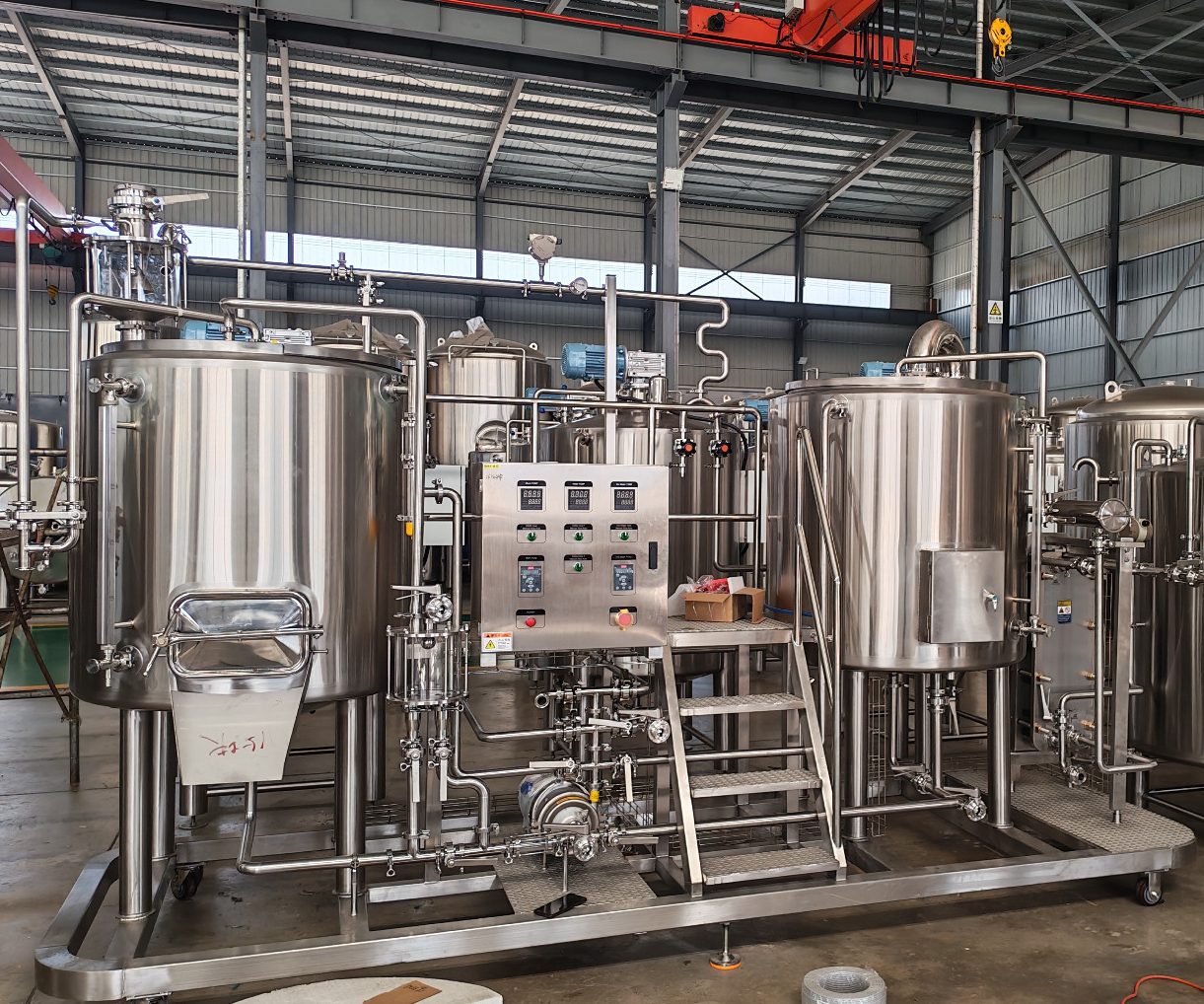
The kettle stands as the anchor of the hot-side brewhouse. In the UK, conventional nanobreweries and microbreweries typically rely on a beer brewing equipment commercial configuration powered by one of two clean energy designs:
- Steam-Jacketed Systems: High-pressure steam circulates through a dedicated shroud wrapped around the exterior wall. This configuration applies thermal energy evenly across a broad surface area, ensuring a vigorous, rolling boil without scorching the wort.
- Industrial Electric Systems: An energy-efficient and scalable solution favored by urban installations. Rather than homebrew-style exposed elements, modern electric brewhouses use low-watt-density internal or external heating arrays. This architecture delivers high thermal efficiency while completely avoiding local hot spots.
To guarantee product consistency across massive batches, professional beer brewing equipment integrates seamlessly with digital PLC or high-precision PID monitoring arrays.
2. Glycol-Jacketed Fermentation Vessels
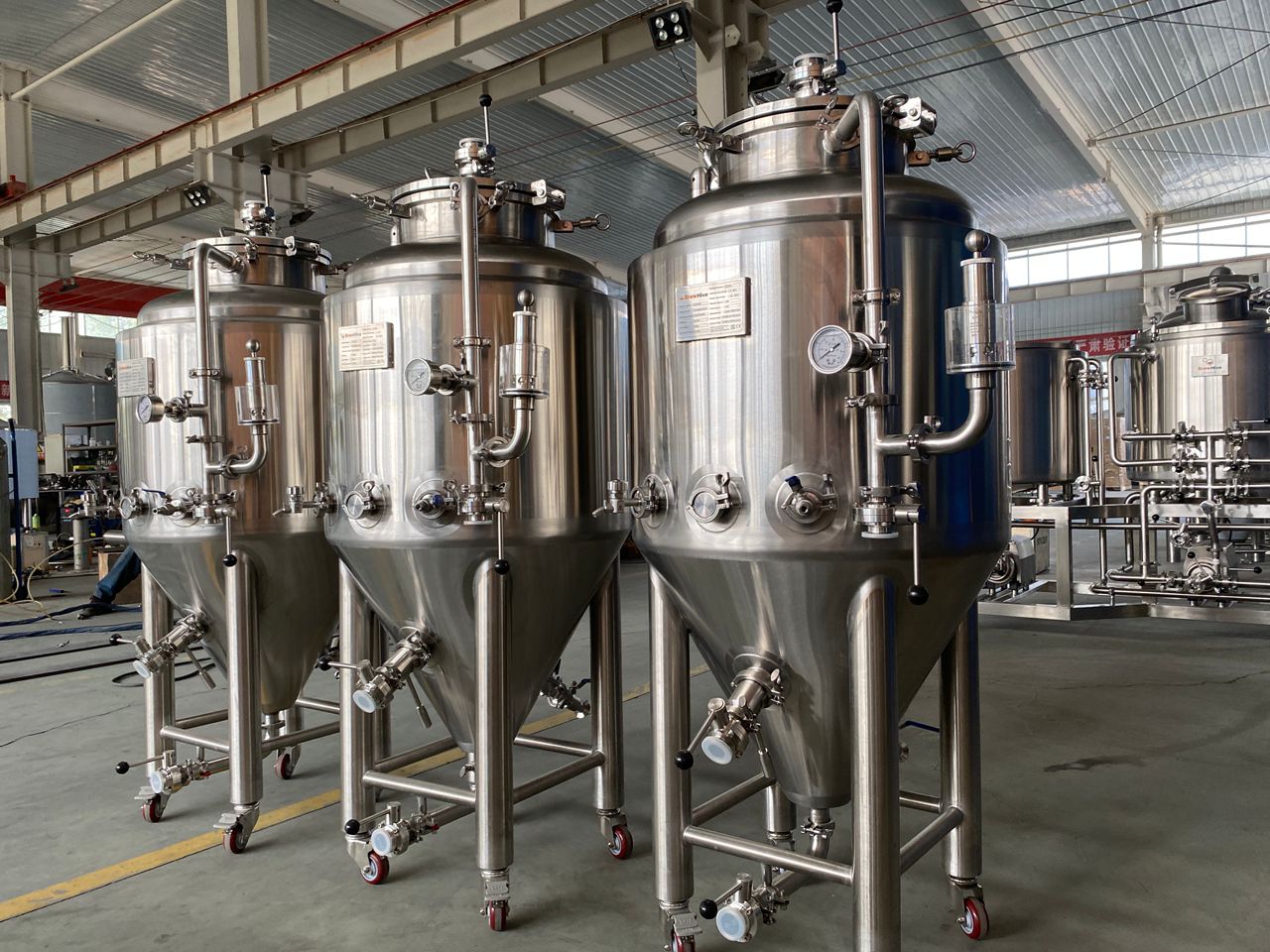
Once cooled, processed wort moves immediately into professional cellar tanks. Modern operations in the UK standardise their setups by utilising industrial microbrewery equipment standards, which prefer heavy-gauge stainless steel 304, dual- or multi-jacketed conical fermenters. Often deployed as Unitanks, these vessels manage both primary fermentation and subsequent conditioning/carbonation under pressure within a single tank wall.
Commercial arrays scale seamlessly across specific volumetric requirements:
Cellar Management: Each airtight vessel features integrated glycol jackets linked directly to a centralised cooling loop. This allows for fine-tuned temperature profiles down to a fraction of a degree, preventing yeast stress and securing clean fermentation kinetics.
Cellar Scale: Depending on target production limits, cellars can utilise an entry-level 100L or 200L footprint, scaling all the way up to specialized 400L or 500L configuration layouts.
3. Digital Density Meters and Inline Refractometers
To accurately verify fermentation progress, sample attenuation, and log absolute alcohol by volume (ABV), a commercial facility moves past fragile, manual glass hydrometers. Industrial operations look to professional brewing equipment like sanitary inline refractometers or electronic benchtop digital density meters. These instruments gather data in real-time or from micro-samples with total precision. This workflow enables head brewers to pinpoint yeast health and remain strictly compliant with local tax and product label reporting laws.
4. Sanitary Centrifugal Transfer Pumps
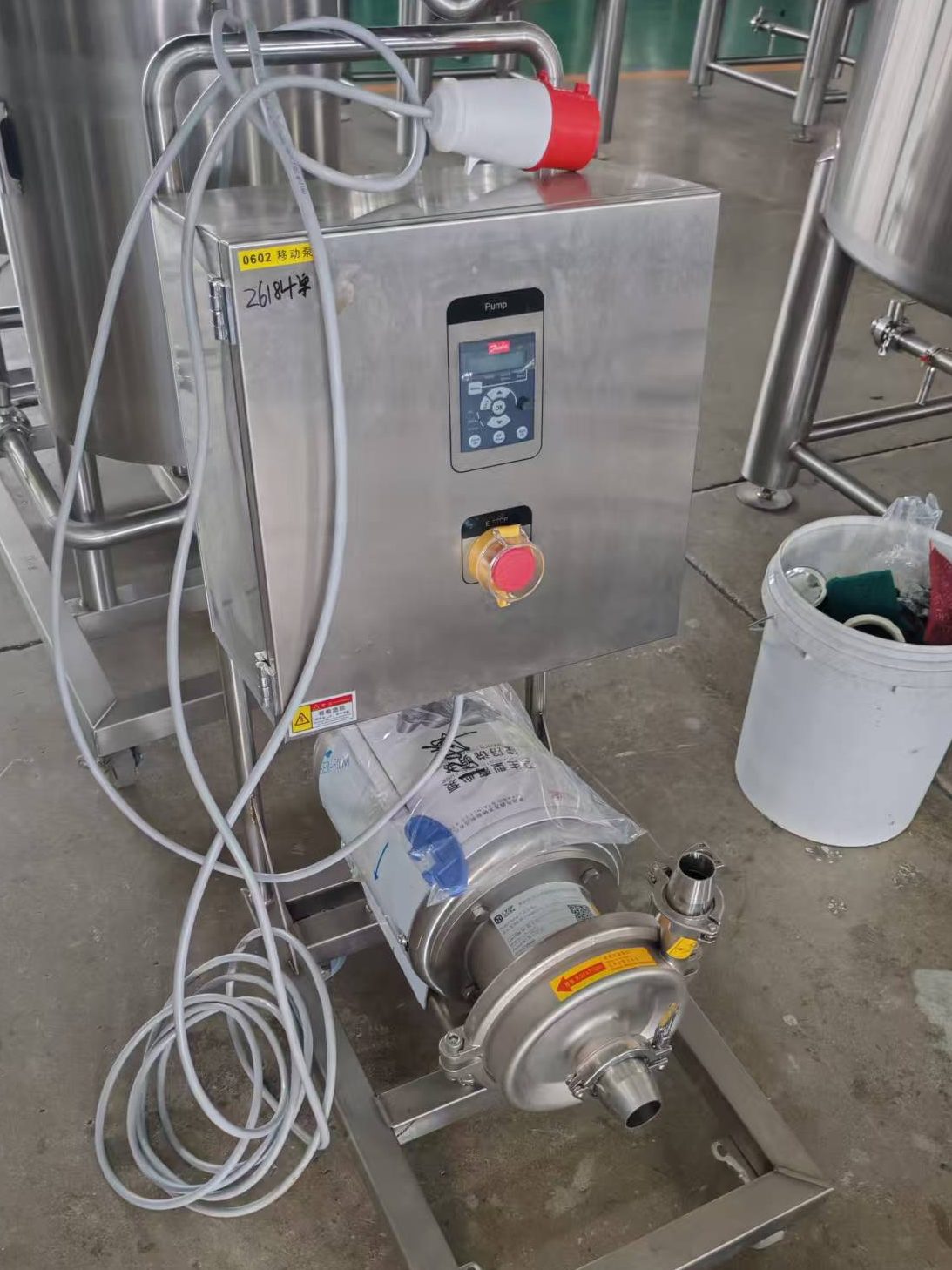
Gravity drops and manual tools are totally eliminated on the production floor. Instead, facilities move fluids using heavy-duty, sanitary stainless steel centrifugal brewery machinery. These high-grade transfer pumps are specifically engineered to move thousands of liters of hot wort or conditioned beer under strict pressure without introducing structural shear or oxygen. This design ethos preserves optimal shelf-life and functions seamlessly alongside standard clean-in-place protocols.
5. Brite Tanks for Final Conditioning
Before heading to packaging, carbonated beer requires dedicated holding space for final stabilisation and settling. Integrating high-spec bright beer vessels - such as a specialised flange manhole brite tank - ensures the product clarifies perfectly under counter-pressure. This stage acts as an invaluable operational buffer, preserving absolute carbonation and shield integrity before the fluid moves to keg lines or canning lines.
6. Automated Canning Machines and Keg Systems
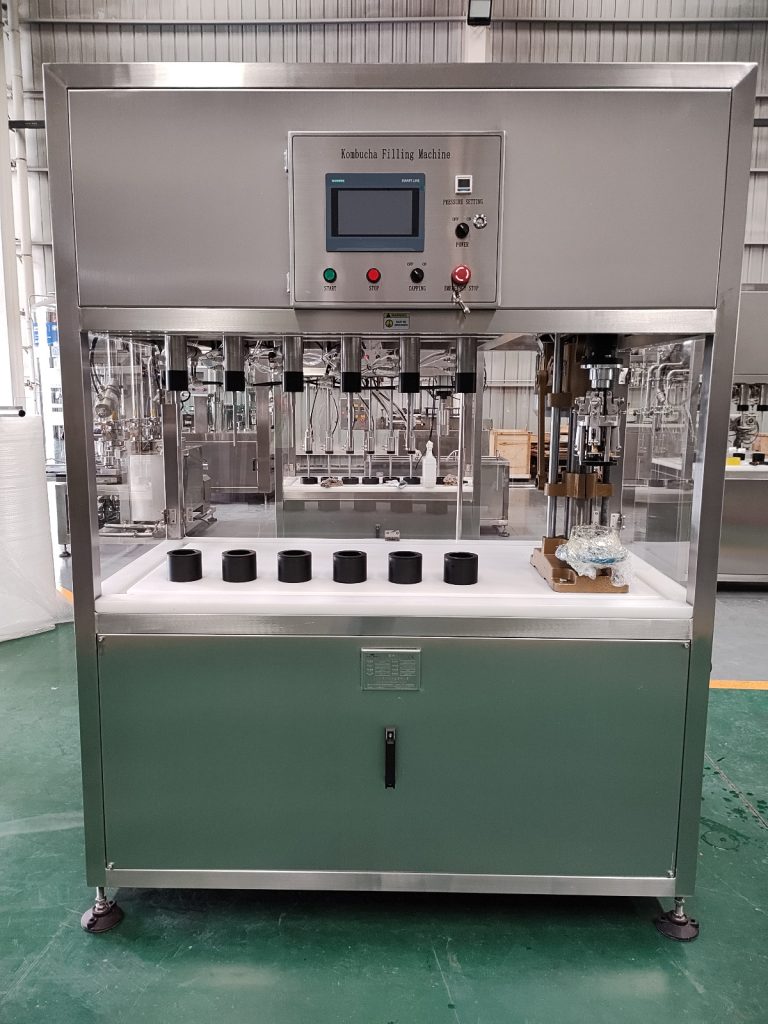
While entry-level manual fillers can suffice for nano-scale testing, an established brand requires high-speed commercial brewery equipment to successfully package its product at scale. High-yield facilities favor a specialized automatic canning machine fitted with pre-evacuation CO₂ loops and precision counter-pressure filling heads.
For bulk draught packaging, facilities count on a semi-automatic PLC-controlled keg washer and filler. These pneumatic multi-head stations purge, sanitize, rinse, and load steel casks or kegs rapidly, maintaining minimal Dissolved Oxygen (DO) numbers to protect product freshness and shelf stability.
7. Multi-Stage Plate Heat Exchangers (Wort Chillers)
Dropping the temperature of vast quantities of boiling wort down to yeast-pitching range within minutes is vital to isolate delicate aromatics and protect against environmental bacterial infection. Facilities achieve this through high-capacity beer brewing equipment like multi-stage stainless steel plate heat exchangers (PHE). These systems run boiling wort and sub-zero cooling media (glycol and water) in opposing directions across alternating corrugated plates, completing a major thermodynamic exchange inline in a fraction of the time.
8. Premium Malt Mills and Grist Transport Systems
The brewing process begins long before water hits a hot-side tank. Utilising a high-output industrial malt mill or robust grain mill ensures malted grain is processed smoothly at scale. These premium systems use precise multi-roller setups to crack open the starchy core of the grain while leaving the protective husk intact, creating the ideal natural filter bed for lautering. Modern installations fit their mills with explosion-proof motors and flexible augers to transport hundreds of kilos of grist directly to the mash tun automatically.
9. Mobile Clean-In-Place (CIP) Skids
Absolute cellar sanitation remains the single most defining variable behind an operation's market reputation. To ensure thorough hygiene without forcing manual teardowns, facilities utilize a CIP system mobile cart or dedicated sanitising skid. These specialised carts house independent tanks for hot caustic washes, acid passes, and chemical sanitisers. Hooked into a tank's internal rotating spray balls, the high-velocity pump recirculates solutions automatically, saving massive volumes of water while achieving total sanitation.